Kitchen Layout.
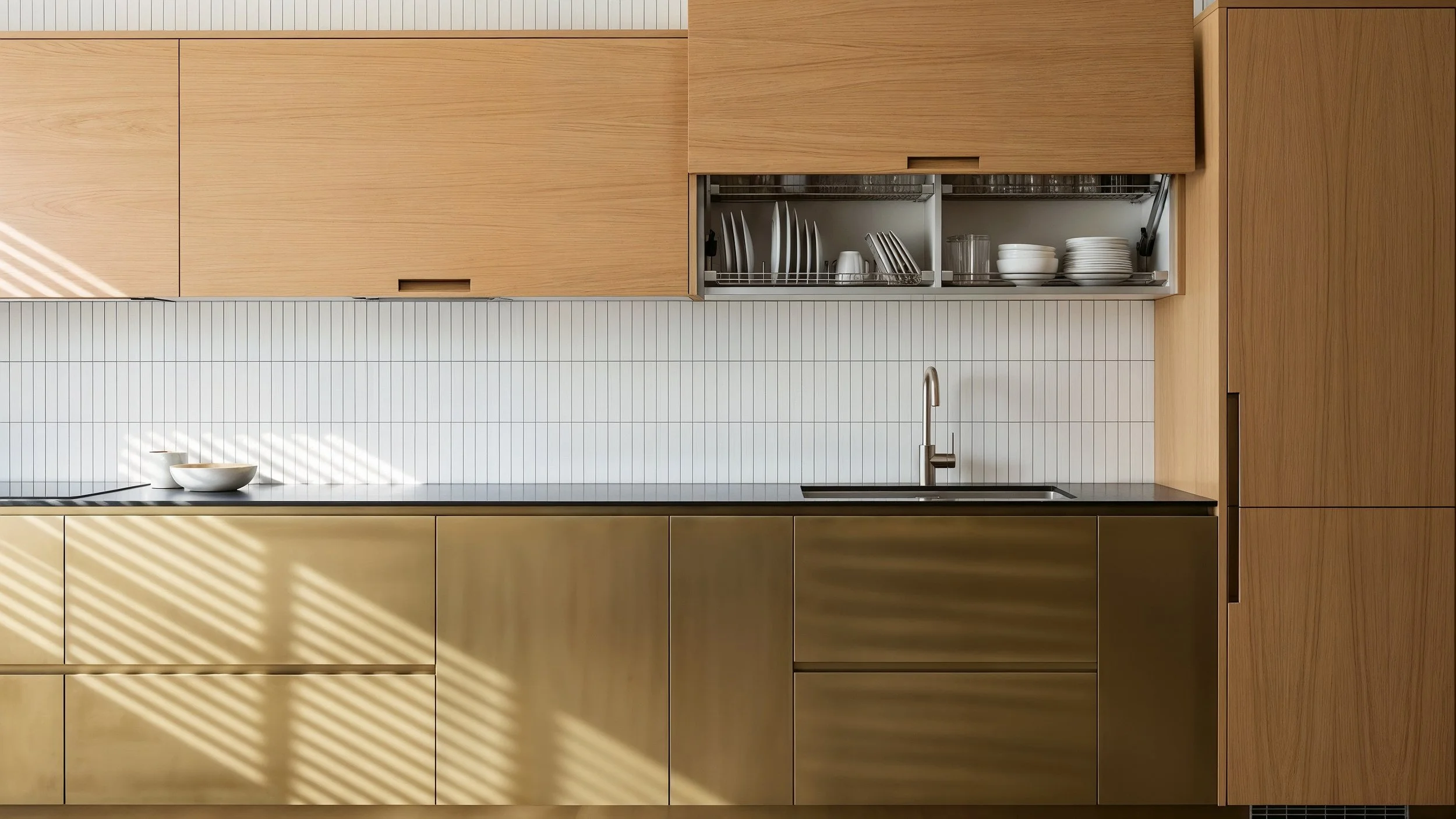
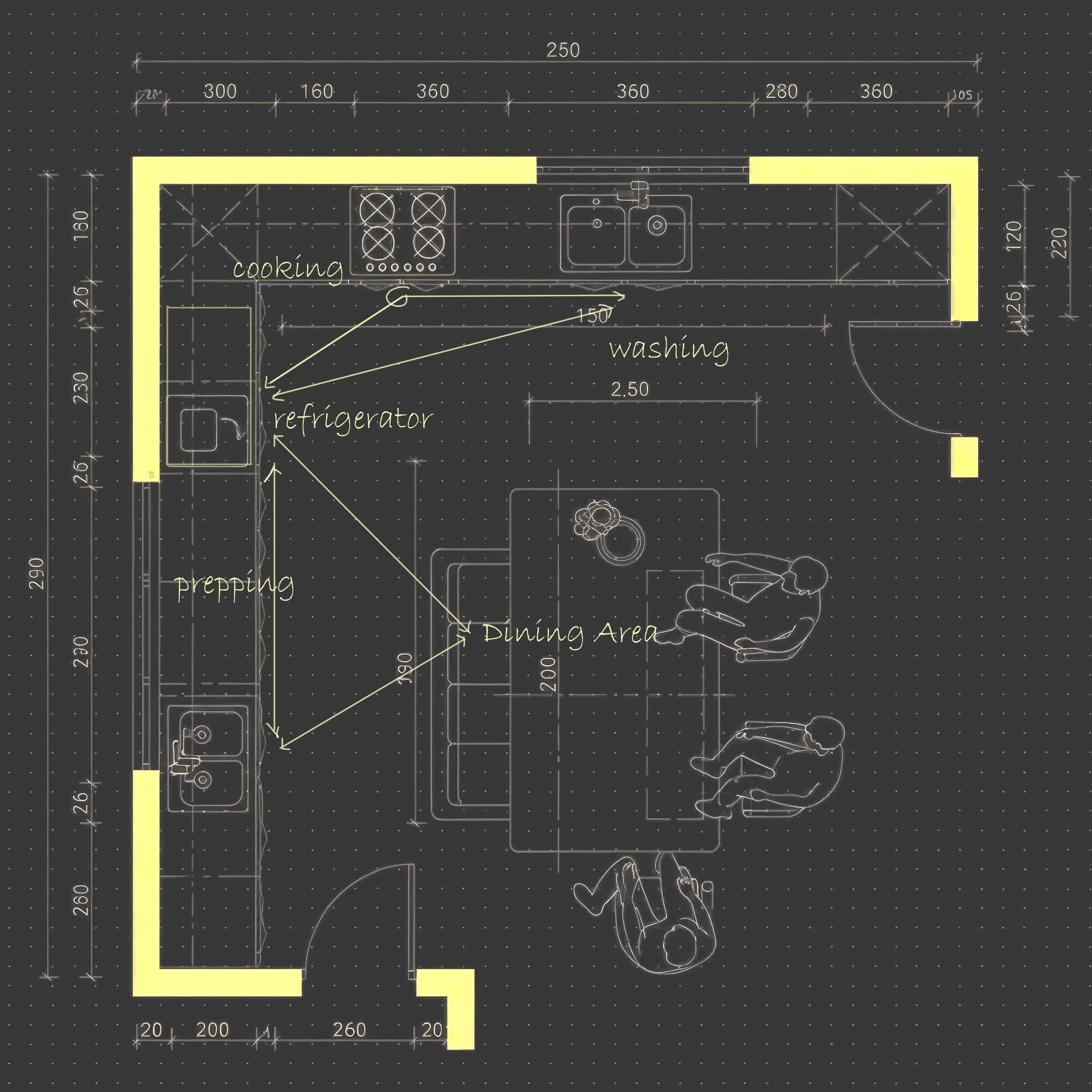
A well-planned kitchen layout is essential for creating a space that functions smoothly and efficiently. The layout determines how easily you can move between key work zones—such as cooking, prepping, and cleaning—helping you complete daily tasks with less effort. Whether the kitchen is large or compact, a thoughtful layout ensures every inch is used wisely and supports natural, intuitive movement.
The working zone between the refrigerator, stove, and sink—often called the kitchen work triangle—is one of the most important principles in kitchen design. This layout concept ensures that the three most frequently used areas are positioned within efficient distance of one another, reducing unnecessary movement and making cooking tasks faster and more intuitive. When the triangle is well-planned, daily tasks like prepping, cooking, and cleaning flow naturally.
Balanced proportions, clear sightlines, and well-organized zones make the kitchen feel larger, more open, and visually harmonious. In short, a well-designed layout transforms the kitchen into a space that is both beautiful and truly functional.
Proportion.
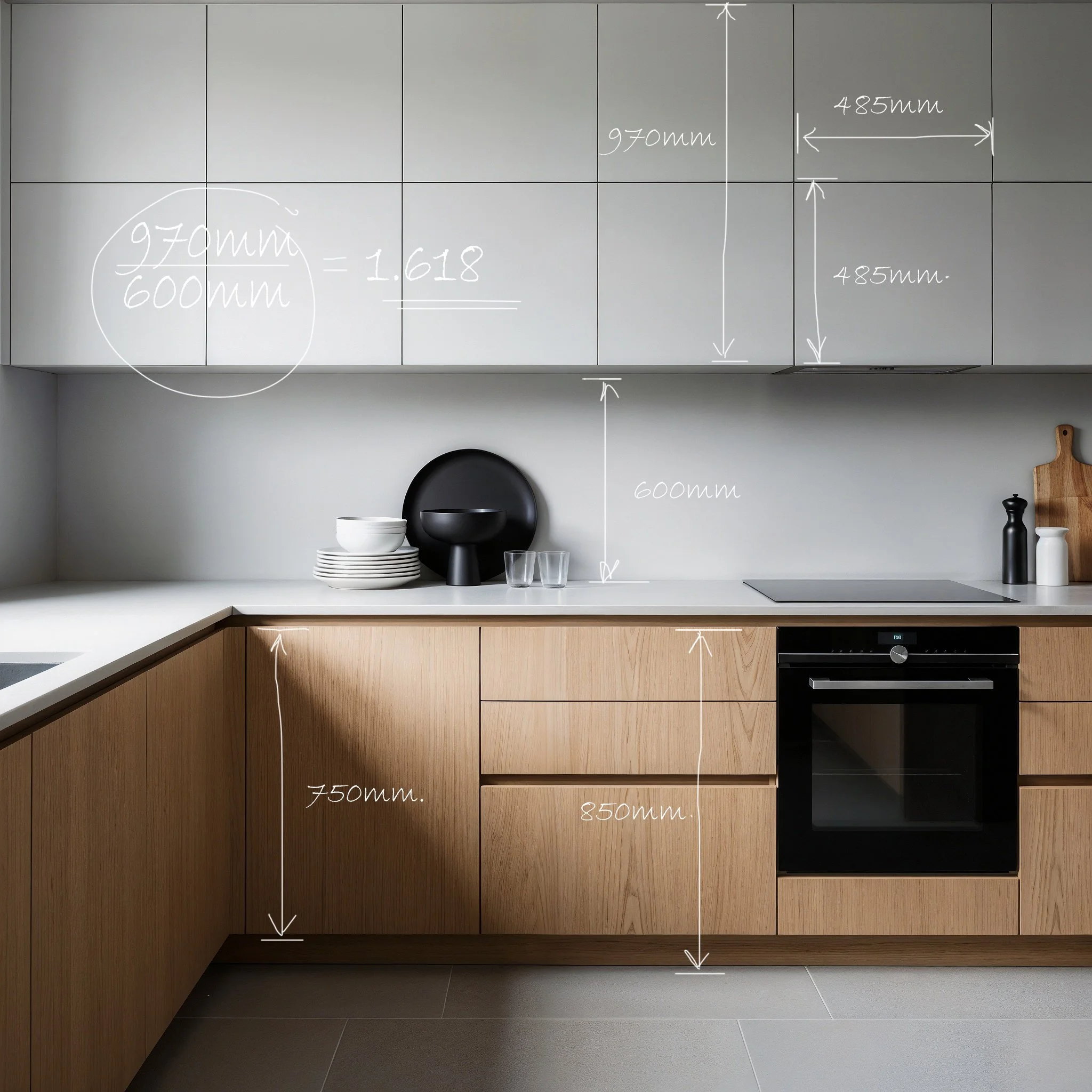
Proportion is one of the most important elements in kitchen cabinet design because it shapes the visual balance of the entire space. Since cabinets take up so much room, the size and spacing of doors, drawers, and panels determine whether the kitchen feels harmonious or awkward. Well-proportioned cabinets create a calm, clean look, while poorly sized ones can make even good materials appear unbalanced.
Good proportion also improves everyday function. Proper cabinet heights support comfortable use, drawers work more smoothly when sized correctly, and aligned doors and panels help appliances and hardware fit naturally into the layout. In this way, proportion affects not just looks but how easy the kitchen is to work in.
Finally, proportion brings all design elements together—materials, colors, hardware, and layout—into one cohesive whole. No matter the style, balanced cabinet ratios help the kitchen feel timeless and intentional. It’s the quiet design principle that makes a kitchen look polished and feel right.
Colour & Texture.
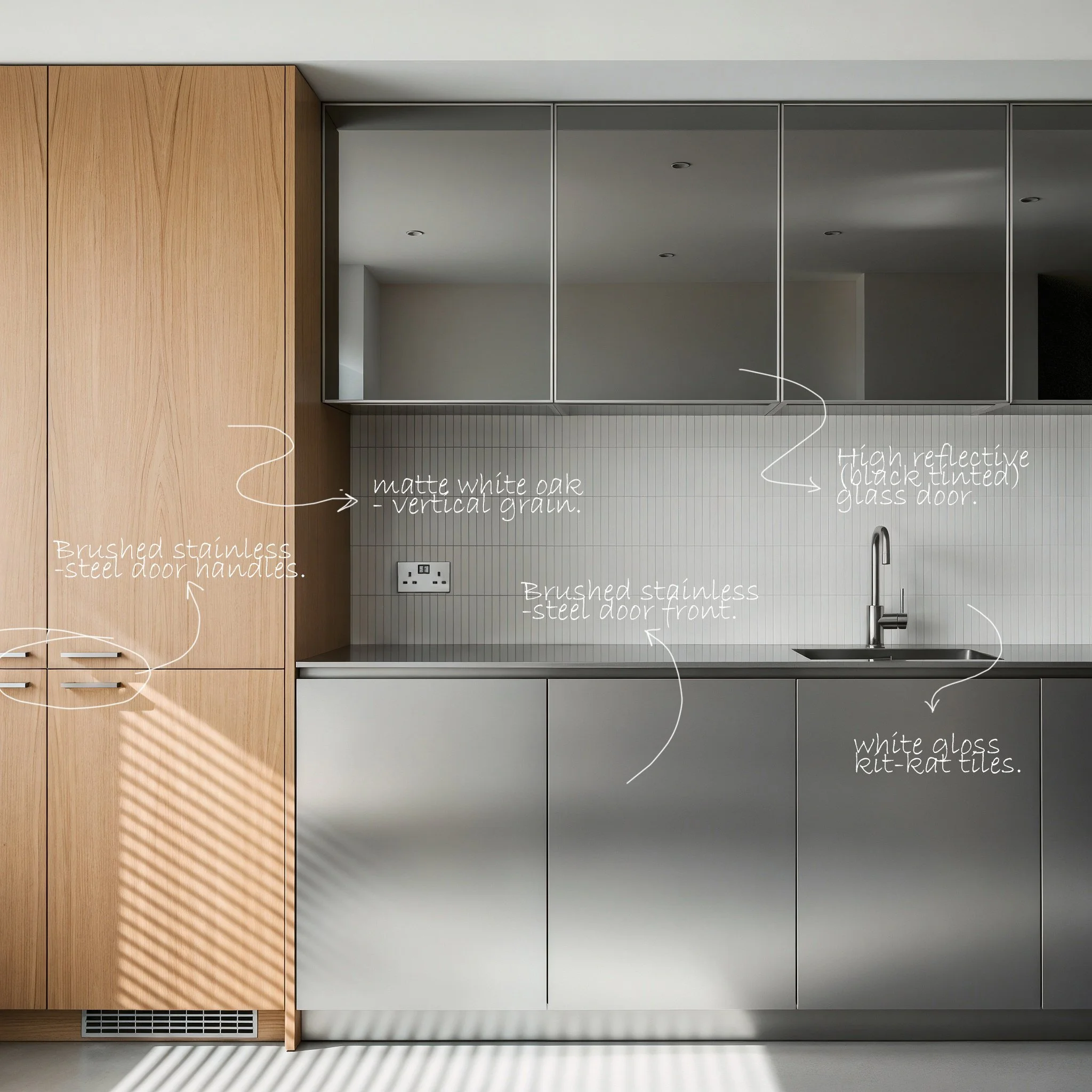
Color, material, and texture work together to define the overall character and atmosphere of a kitchen. The color of the cabinets sets the emotional tone of the space—whether calm and understated or bold and expressive—and helps establish harmony with the surrounding elements such as walls, flooring, and countertops. Choosing the right color palette ensures the kitchen feels cohesive, inviting, and visually balanced.
Material selection is equally critical, as it determines the durability, function, and long-term performance of the cabinetry. Whether using solid wood, engineered panels, laminates, or painted finishes, each material carries unique qualities in strength, stability, and maintenance. High-quality materials not only elevate the aesthetic appeal but also ensure that the kitchen can withstand daily wear and remain beautiful for years.
Texture adds depth and richness, enhancing both the look and feel of the cabinets. From natural wood grain to matte lacquer, brushed metal, or smooth satin surfaces, texture introduces visual interest and tactility that prevent the kitchen from feeling flat or monotonous. When color, material, and texture are thoughtfully coordinated, the cabinetry becomes a refined, cohesive centerpiece that elevates the entire space.
Hardware & Accessories.
Choosing the right kitchen hardware and accessories is essential because they quietly define the kitchen’s overall look. Handles, knobs, and pulls serve as the design accents that tie cabinetry, materials, and finishes together, shaping the visual personality of the space.
Functionally, well-made hardware and smart accessories make daily use smoother and more enjoyable. Soft-close hinges, durable pulls, and organized storage systems enhance comfort, efficiency, and long-term performance.
Serving as the internal framework of the cabinet system, the accessories provide structure and performance, while the doors and drawers form the aesthetic outer layer that completes and defines the overall design. Ultimately, thoughtful hardware and accessories bring both beauty and practicality to the kitchen, elevating the space with refinement, ease, and everyday functionality.